 021- 31589128
 info@yidahospital.com
 Chinese



"Chinese Heart" brings new life
Recently, the Heart Center of Shanghai Yida Hospital witnessed a race against time—a battle to sustain life. Professor Wan Feng, together with a multidisciplinary team, performed an off-pump artificial heart implantation on Auntie Yan, a patient suffering from end-stage heart failure. As a made-in-China magnetic levitation artificial heart began to beat steadily inside her chest, it not only rekindled her hope for a second chance at life, but also brought new light to over one million end-stage heart failure patients across China.
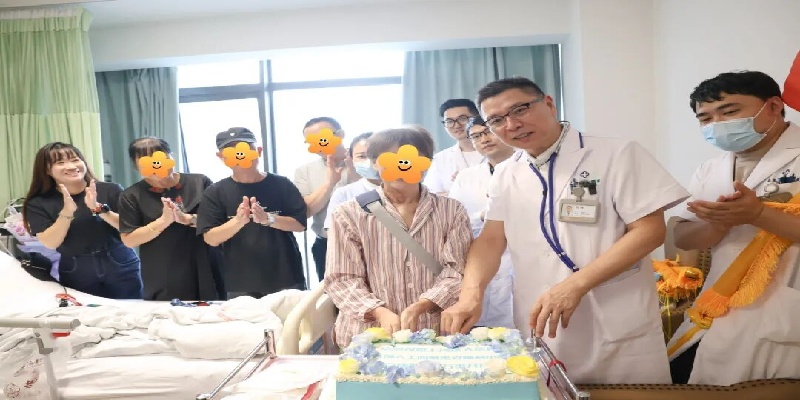
A Decade of Struggle: A Cry for Help
“For ten years, it felt like carrying a boulder on my back every single day.” Auntie Yan’s words speak for countless heart failure patients. A decade ago, she was diagnosed with dilated cardiomyopathy, and her heart function continued to deteriorate. Over the past year, her condition worsened sharply, with repeated acute heart failure episodes. Frequent hospitalizations and dependence on medication made even the simplest daily activities a luxury.
Auntie Yan’s struggle is not unique. According to the Report on Cardiovascular Health and Diseases in China, there are over 10 million heart failure patients in the country, of which approximately one million have reached the end stage. While heart transplantation remains the ideal treatment, only about 1,000 such surgeries are performed each year—a stark mismatch with the overwhelming demand.
“When medication fails and heart transplantation is not a feasible option, an artificial heart becomes the patient’s last lifeline,” explained Professor Wan Feng. “It can serve as a bridge to transplant, or as a permanent destination therapy.”
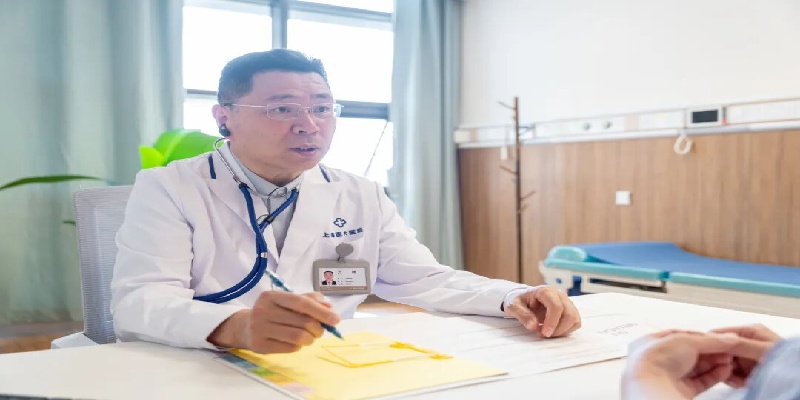
Performing the Dance of Life on Beating Heart
Given Auntie Yan’s frail condition, traditional artificial heart implantation—which requires stopping the heart and relying on cardiopulmonary bypass—posed extreme risks. “Stopping the heart and using extracorporeal circulation would mean a ‘second blow’ to an already weakened myocardium,” Professor Wan noted.
After careful evaluation by a multidisciplinary team (MDT), the cardiac center decided to adopt the off-pump implantation technique with parallel circulatory support. This approach is akin to repairing a precision instrument while it is still in motion. It involves performing highly delicate maneuvers—such as creating an apical opening, positioning the device, and anastomosing vessels—all while the heart continues to beat.
Professor Wan emphasized that the beating-heart technique minimizes myocardial injury, preserves functions of vital organs such as the liver and kidneys, and significantly reduces postoperative complications. However, it pushes the limits of the surgeon’s skill, team coordination, and the hospital’s comprehensive capabilities.
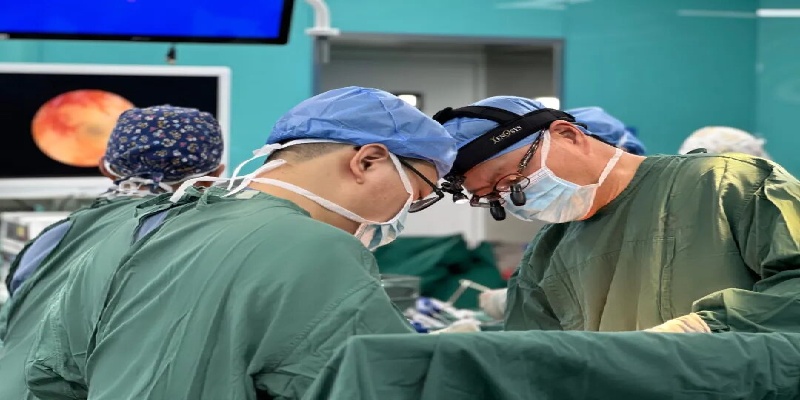
On the day of the surgery, supported by parallel circulation, Professor Wan’s team performed a median sternotomy and carried out each step with precision on the actively beating heart. Under magnification, a 2-cm opening was made at the cardiac apex. The inflow conduit of the artificial heart was connected to the apex, and the outflow graft was anastomosed to the aorta. Every heartbeat tested the team’s coordination and accuracy.
Four hours later, as the new-generation magnetic levitation artificial heart started operating smoothly and the monitor showed stable vital signs, the operating room erupted into relieved applause—the ultimate test of skill and perseverance was a success.
A Chinese “Heart” Allows Her to Return Home for Mid-Autumn Reunion
After the operation, Auntie Yan was transferred to the Cardiac ICU for 24/7 specialized monitoring. She was successfully extubated on the first postoperative day, began eating on her own by the third day, and was transferred to a general ward and started walking within a week.
“It feels like a quiet little motor in my chest—I’ve never breathed so easily in my life!” A long-lost smile reappeared on Auntie Yan’s face. Follow-up examinations showed that her left ventricle had significantly reduced in size, and her cardiac function was steadily recovering. Overjoyed, she shared that being able to recover and return home in time for the Mid-Autumn Festival made her feel truly blessed.
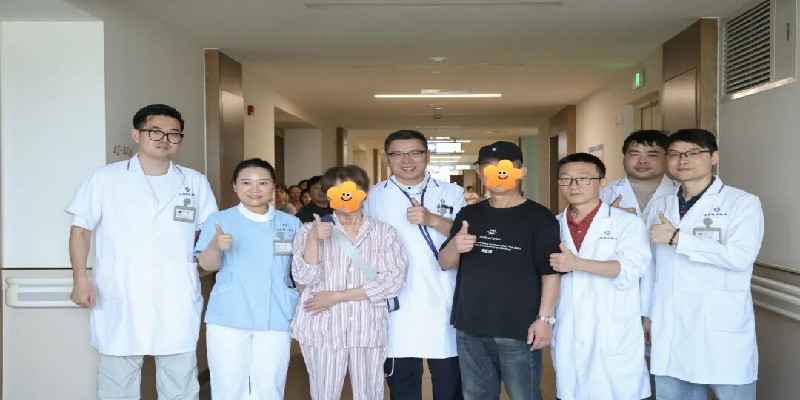
Behind this medical miracle lies over three decades of dedicated expertise from Professor Wan Feng’s team. As a pioneer of minimally invasive off-pump coronary bypass surgery and a trailblazer in the clinical application of artificial hearts in China, Professor Wan has performed more than 20,000 cardiac surgeries and achieved 11 groundbreaking “first-in-China” procedures.
“The device implanted is a third-generation magnetic levitation artificial heart—more compact, lighter, and with a significantly lower risk of thrombosis,” Professor Wan revealed. “China’s artificial heart technology is entering a phase of rapid development. In the past five years, four domestic companies have gained approval for their artificial heart devices. The number of clinical implantations of domestic artificial hearts has already surpassed that of heart transplants, with an estimated annual implantation rate exceeding 1,000 cases.”
Even more encouraging is the fact that the therapeutic outcomes of these homegrown devices have reached internationally leading standards: the one-year survival rate stands at 90%, and the five-year survival rate approaches 70–80%.
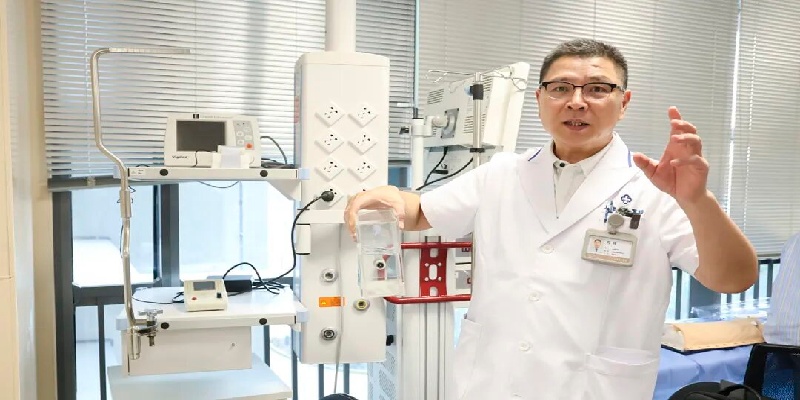
This compact “Chinese heart” embodies the wisdom and compassion of China’s medical professionals—and carries the dreams of countless families longing for reunion. Beating strongly, it heralds a new movement of life for end-stage heart failure patients.
- This Week at YiDa Hospital: Welcoming Kasem University DelegationApr 1, 2026
- "Chinese Heart" brings new lifeOct 2, 2025
- Mayo Clinic Delegation Visits Shanghai Yida HospitalAug 23, 2025
- Consulate Official Commends Yida International Medical CenterAug 9, 2025
- Yida Hospital & MSH Launch Direct Billing PartnershipJun 19, 2025

 沪公网安备 31011802004641号